
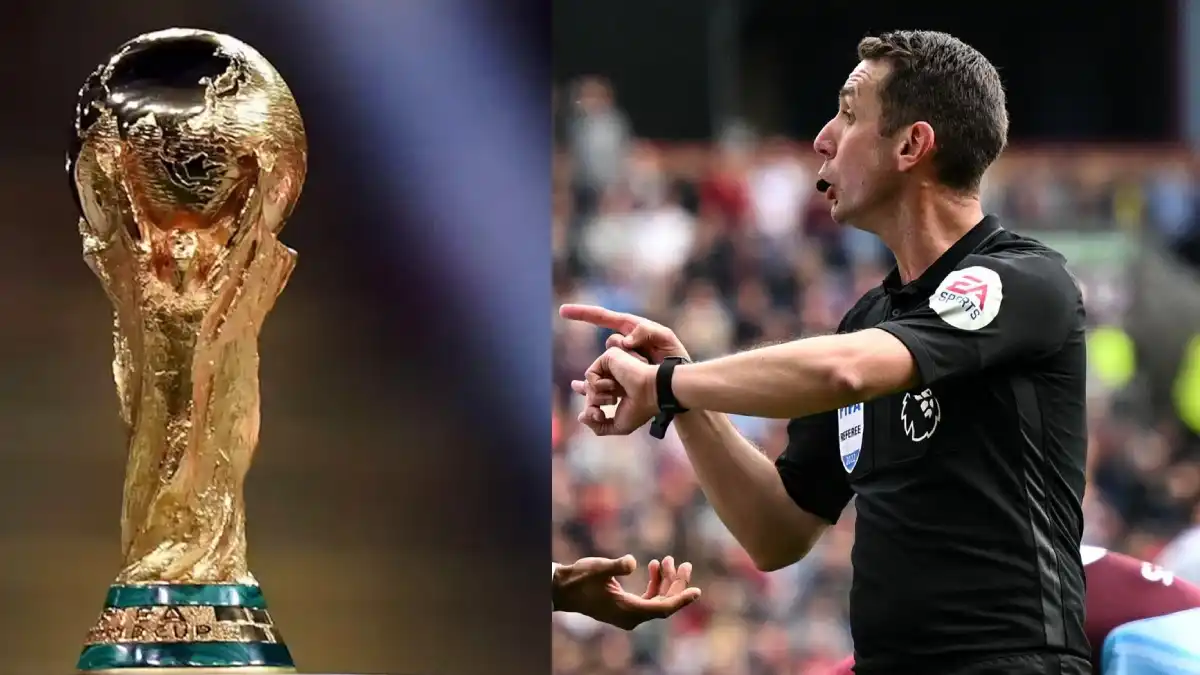
FIFA is attempting to promote fairness and also to hasten up the game through these regulation changes which will come into force from the commencement of the 2026 World Cup.
This summer, the United States, Mexico, and Canada will host the biggest FIFA World Cup history, with 48 nations competing in the main event. FIFA has implemented a few additional policies to increase the thrill of the competition.
The World Cup will mark the introduction of these modifications, which could spark intense debate among supporters. The VAR makeover is the most notable of these new regulations, and it will undoubtedly cause a stir at the tournament. The new measures also attempt to speed up the game.
Here, we examine the adjustments that will be implemented beginning with the World Cup and their potential effects on the game.
FIFA World Cup: VAR overhaul
VAR is constantly being discussed, and with the most recent additions, the disputes are expected to intensify at the World Cup.
Video officials can now review second yellow card decisions that result in a sending-off under the new regulations. However, this will only be permitted in cases where the original reservation had a “clear and obvious error.” In situations where the referee cautions or dismisses the incorrect player due to mistaken identity, the video referee may also step in.
Corner kicks can also be reviewed at this time, but only in cases when the award was obviously incorrect. Additionally, in order to avoid unduly disrupting the game’s flow, this can only be done instantly.
Also Read: 5 Greatest FIFA World Cup Finals In History
VARs can make these games more equitable, but they also raise the possibility of match disruptions in order to reach the correct decision. However, FIFA has made an effort to speed up the remaining portions of the game to make up for the lost time.
- Second yellow cards (clear/obvious errors)
- Mistaken identity for yellow/red cards
- Incorrectly awarded corner kicks
- Fouls before set pieces
New rule to minimize ‘Time-Wasting’
FIFA has implemented a number of policies in an effort to reduce time wastage during games.
In a throw-in scenario, players must now restart the game within five seconds of the ball being ready. The opposition team will take possession if the time restriction is exceeded. When a player is substituted, they are instructed to leave the pitch within ten seconds. If this isn’t done, the incoming substitute will have to wait one minute before taking the pitch.
Also Read: Who is the Youngest and Oldest player in 2026 FIFA World Cup?
The players who are undergoing on-field treatments will also have to leave the pitch and be prohibited from returning for at least a minute after play restarts. If there is a foul that results in disciplinary action, this will not apply.
Key Rule Changes
| Rule | What Changes | Consequence if Violated |
| 10-second substitutions | Players being replaced must exit within 10 seconds from the nearest sideline | Incoming player waits 1 minute; team plays with 10 players temporarily. |
| 5-second restart countdown | Visible countdown for throw-ins and goal kicks | Throw-in: turnover to opposition; Goal kick: corner to opposition |
| Mouth-covering red card | Player covers mouth with hand/arm/shirt during confrontational disputes | Immediate dismissal (red card) |
| On-field medical treatment | Players receiving treatment must leave pitch | Must wait 1 minute before returning (unless goalkeeper collision/severe injury) |
| Captain-only referee communication | Only team captains can speak with referees | Other players risk yellow card for protesting |
| Leaving field in protest | Player exits pitch to protest a decision | Automatic dismissal (red card) |
| Hydration/strategy breaks | Mandatory 3-minute break around 23rd minute of each half | Can be used for tactics/hydration |
Net Tournament Format
- 48 teams in 12 groups of 4
- Top 2 from each group + 8 best third-placed teams advance to Round of 32
- 104 total matches (largest World Cup ever)
These rules, approved by IFAB, will start at the 2026 World Cup and will also apply during the 2026–27 club season everywhere.

