
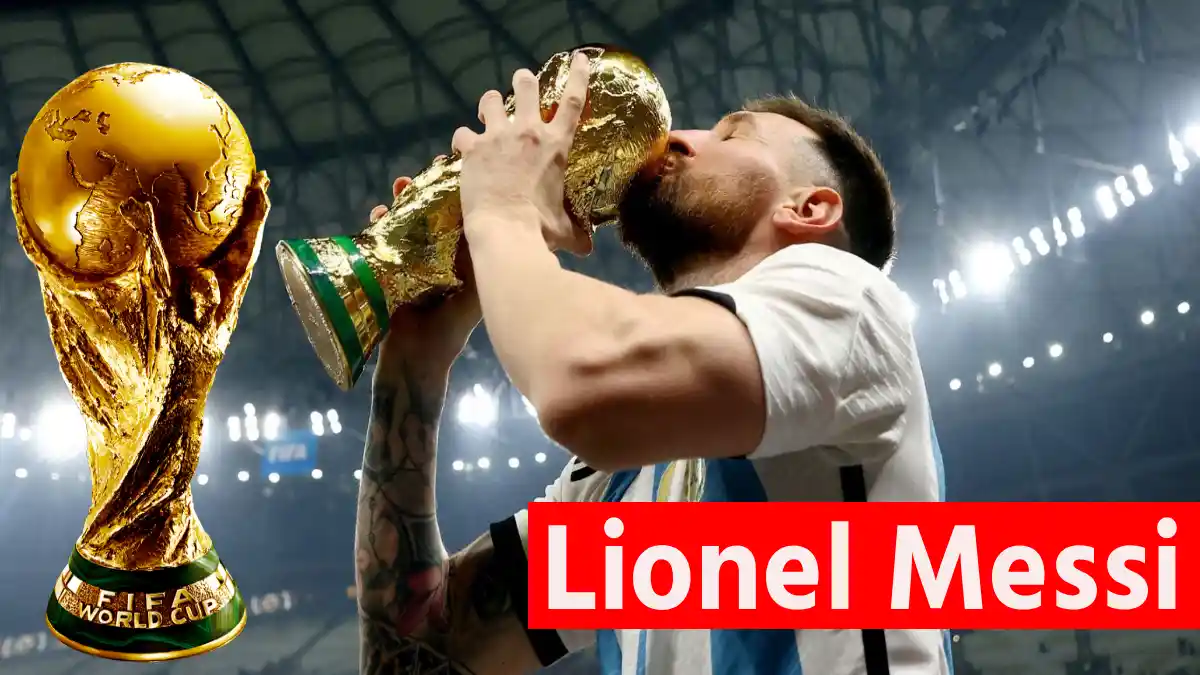
In this article, we will learn about Lionel Messi’s incredible World Cup journey through the years.
Since his international debut for Argentina 6,332 days ago, Lionel Messi has finally won the FIFA World Cup in Qatar 2022. It was a captain’s performance by the ‘little magician’ throughout the tournament where he guided Argentina to glory and ended the country’s 36-year-long wait for winning the FIFA World Cup since their last triumph in 1986 under the captaincy of the late Diego Maradona.
While Messi was finally able to join an exclusive list of FIFA World Cup-winning captains after featuring in five editions, it was the same prize that once drew all the criticism to him. It even went to the extent of people questioning Messi’s commitment to Argentina. The FIFA World Cup was the title that also separated Messi from Maradona amongst the Argentine locals when it came to the ‘greatest of all-time’ debate.
The Start of a Beautiful Journey
Lionel Messi was brought in as a substitute against Hungary on the Argentine national team on August 17, 2005. It was the first time Messi shone for Argentina, where the 18-year-old powered the national team to win the FIFA U-20 Men’s World Cup. He ended the tournament as the highest goal scorer with six goals, which also earned him the title of the best player in the tournament. This was the beginning of a glorious career for Lionel Messi with the Argentina national team. He soon earned his call in the Argentina roster for the 2006 FIFA World Cup in Germany.
2006 FIFA World Cup:
The Firsts Of Many Lionel Messi’s journey on football’s biggest stage began on June 16, 2006 when he was brought in as a substitute against erstwhile Serbia and Montenegro. He played for 16 minutes but was able to provide an assist before ending up scoring his first FIFA World Cup goal.
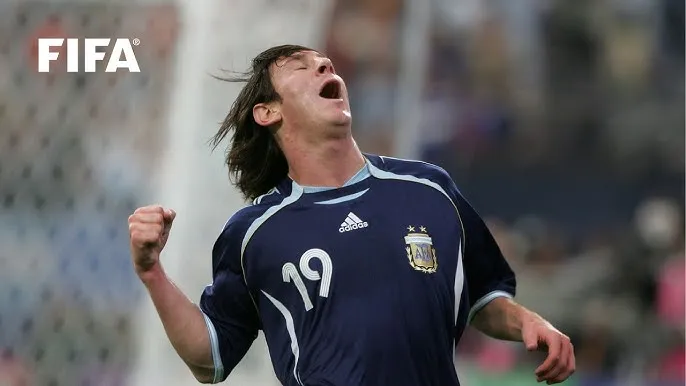
Argentina’s campaign ended in the quarter-finals after losing to hosts Germany in the penalty shootouts at the Olympiastadion in Berlin.
2010 FIFA World Cup Exit
Messi was conferred with his first Ballon D’or and the FIFA World Player of the Year award at the age of 22. He kept on breaking more records with FC Barcelona, but the story was completely different with the Argentina national team. In 2010, Lionel Messi was selected for his second FIFA World Cup in South Africa where Argentina was managed by the late Diego Maradona, the hero of the 1986 World Cup in Mexico.
But Messi’s FIFA Best Player and Ballon D’or awards were questioned because of his performance in the 2010 FIFA World Cup, where he could not score a single goal with the Jabulani. Argentina’s campaign was brought to an end in the quarter-finals by Germany yet again. The Diego Maradona-coached squad lost 4-0 and were knocked out of the tournament.
2014 FIFA World Cup Exit
Despite his rough spell with the Argentina national squad, Messi was able to add two more Ballon D’or awards to his list of personal accolades. With all the achievements and trophies in his cabinet, Messi was still under the shadow of Diego Maradona’s legacy in Argentina.
With all the criticism thrown at him, Messi’s chance for redemption and international glory came in the 2014 FIFA World Cup in Brazil where he was announced as the captain of Argentina. He scored four goals and guided Argentina to the finals of a FIFA World Cup for the first time since 1990.
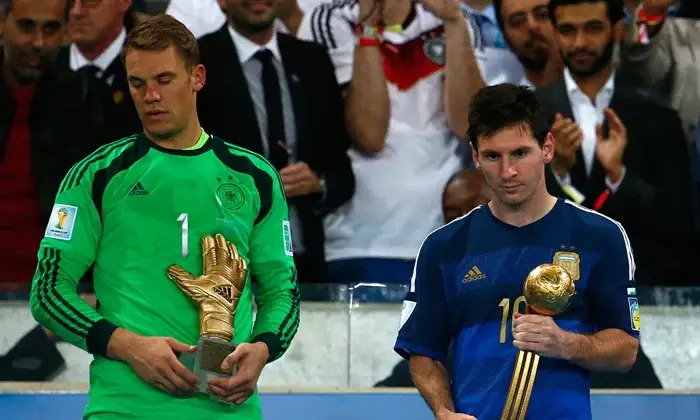
But Germany came back to haunt Messi yet again, beating Argentina 1-0 to win the 2014 FIFA World Cup. Messi was awarded the Golden Ball award for being the best player in the tournament. But his quest for international glory continued.
A thought of Retirement
Lionel Messi and Argentina’s international trophy drought continued after the 2014 World Cup finals, losing two consecutive finals to Chile in the 2015 and 2016 Copa América. Chile hosted the tournament in 2015 where La Roja won their first-ever Copa América title after beating Lionel Messi and Argentina in the finals on penalties. They went on beat Argentina yet again, this time in the United States.
The 100th edition of the Copa América (also known as Copa América Centenario) saw a repeat of the 2015 finals where defending champions Chile defeated Argentina yet again on penalties. This time, Messi missed Argentina’s first penalty from the spot and was left teary-eyed after Chile beat them 4-2 and lifted the special Golden trophy.
Messi later announced his retirement from the Argentina national team after losing three major finals in a span of three years. Messi’s decision also threw light on Argentina’s treatment towards their star player, where they went to the extent of calling him more of a ‘Spaniard’ than Argentine. From Buenos Aires to Rosario and Cordoba, fans took to the streets and pleaded with Messi to not leave the national team.
Messi ultimately made the comeback within a few months.
2018 FIFA World Cup Exit
Ahead of the 2018 FIFA World Cup, Messi received a four-match ban in the World Cup qualifiers that saw Argentina on the verge of failing to qualify for the 2018 edition. Argentina required a victory against Ecuador, a team they could not beat in the last 16 years, to stay in the qualification race. Messi stepped up with a crucial hattrick that confirmed Argentina’s qualification to the 2018 FIFA World Cup in Russia.
In 2020, Argentina won the Copa America 1-0 aginst Brazil in the final. The team was finally able to end a 28-year major trophy drought and Messi was finally able to lift his first-ever international trophy for Argentina. The 2020 Copa América triumph was followed by the 2022 Finalissima (also known as the CONMEBOL-UEFA Cup of Champions), where Argentina faced European champions Italy at Wembley Stadium on June 1, 2022. Messi led Argentina to beat the Roberto Mancini-coached Azzuri side 3-0 to lift the Cup of Champions.
The Final Triumph
The 2022 FIFA World Cup Messi announced that the 2022 edition of the FIFA World Cup would be his last considering his age in the next edition that will be held in the United States, Canada and Mexico in 2026. Argentina started the tournament with a 36-game unbeaten streak but they lost to Saudi Arabia 2-1 in their opening match. From there, Messi led Argentina to another final where they faced defending champions France.
Also Read: 2026 FIFA World Cup New Rules Explained: New ‘Time Wasting’ Rule Added
Argentina Superstar scored two goals in 120 minutes of the final but Argentina-France finished it 3-3 after the end of stoppage time. Messi scored in the penalty shootout and witnessed Argentina beat France 4-2 on penalties to win the FIFA World Cup 2022. Messi broke various records during the 2022 FIFA World Cup campaign.
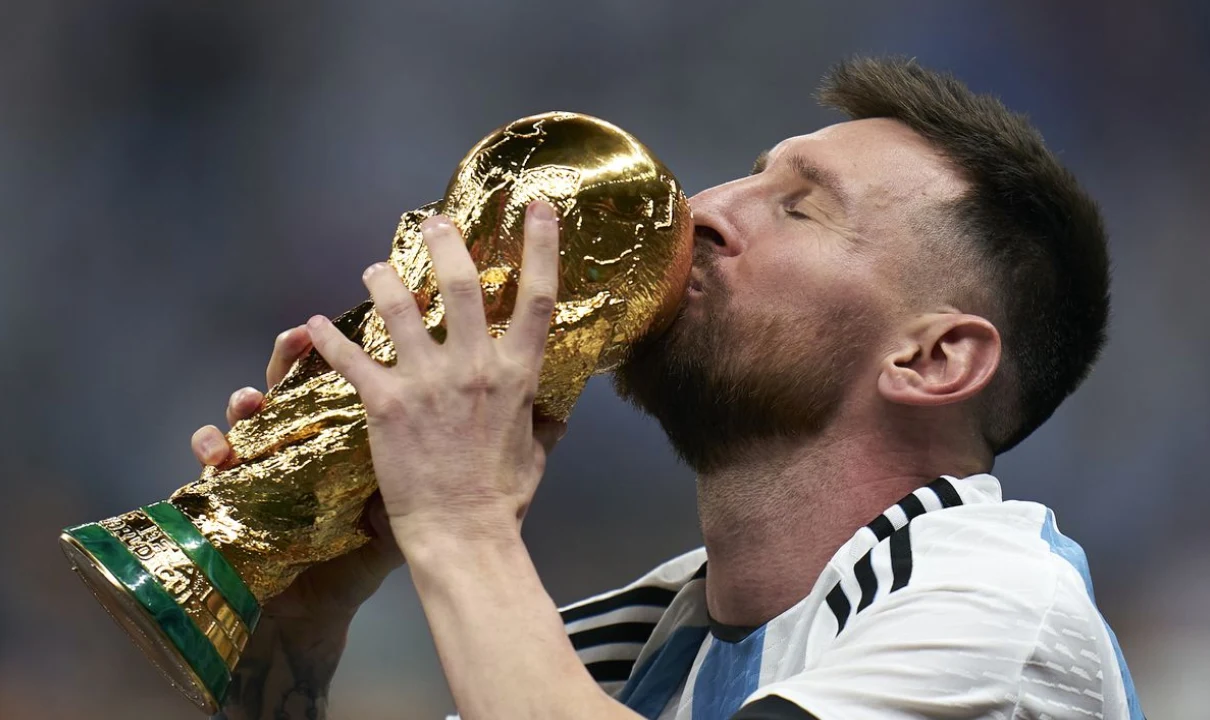
Leo Messi became the first player in FIFA World Cup history to win the Golden Ball award twice for being the best player in the tournament. His quest for World Cup glory came at last, 6,029 days after making his debut for Argentina on football’s biggest stage at Germany’s Veltins Arena on June 16, 2006. With the victory, Messi helped Argentina win their third title after 1978 and 1986. With the World Cup in his hands, Messi received a hero’s lift from his teammates, evoking memories of Maradona’s celebration after winning the final at Estadio Azteca in 1986.

