
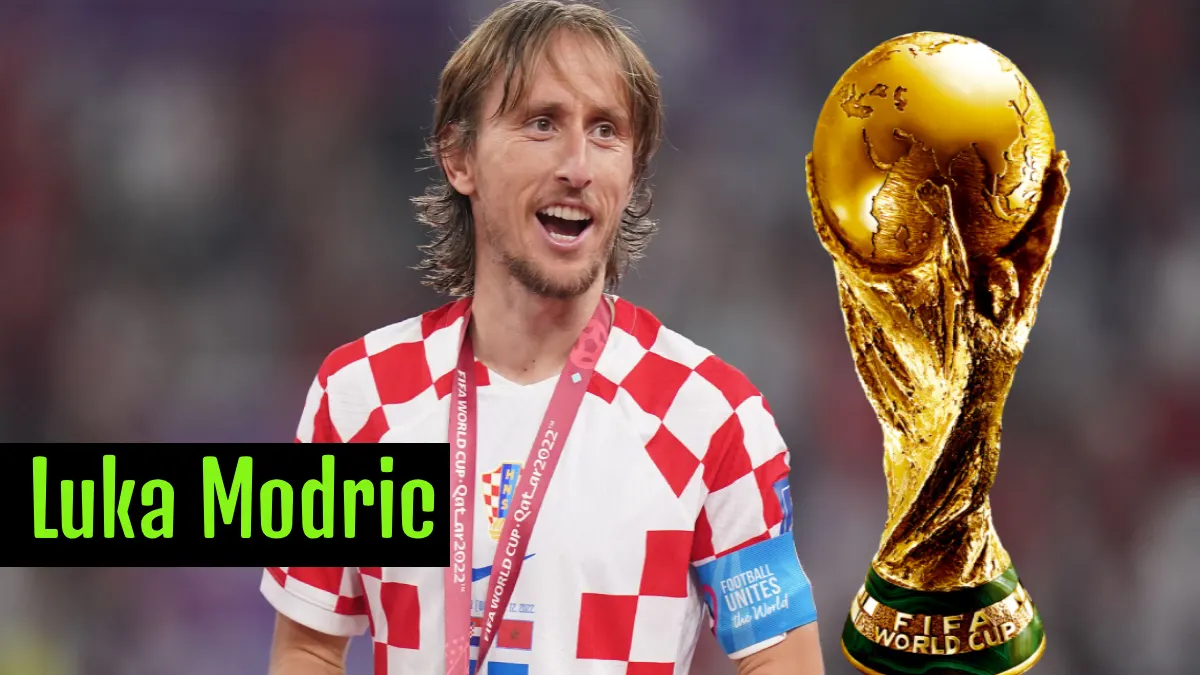
Luka Modric’s World Cup journey shows how he became more than just a great player. From his first tournament in 2006 to leading Croatia to a third-place finish in 2022, he built a legacy through his long career, strong leadership, and top performances on the biggest stage.
2006 – The Beginning (Germany)
Luka Modric’s 2006 World Cup was short. He made his first World Cup appearance in Germany at 20 years old. He played only two group games, coming on as a substitute against Japan and Australia. He didn’t play in the match against Brazil. Croatia was knocked out in the group stage.
He only came on as a substitute in that World Cup, showing he was still a young player and not a team leader. The tournament began Modrić’s World Cup journey, but it wasn’t the big moment that made him famous. Later he became the key player for Croatia and one of the
game’s best midfielders. In 2006 he was just getting started, not yet having his big breakthrough.
2014 – The Return (Brazil)
Luka Modric had a disappointing 2014 World Cup with Croatia. The team finished last in Group A and didn’t make it to the knockout rounds for the second World Cup in a row.
Modrić started three group games: a 0–3 loss to Brazil, a 4–0 win over Cameroon, and a 1–3 loss to Mexico. He played in the Cameroon match after recovering from a foot injury. He was Croatia’s central playmaker and captain, controlling tempo, linking defence and attack, and taking set-pieces. His performances were often the team’s best even though Croatia were inconsistent. Croatia finished third in Group A and did not reach the round of 16, being eliminated on tiebreakers (goal difference/fair play). Modric started and played every minute (270 minutes) in his second World Cup, but Croatia couldn’t beat their strong opponents. Overall, the 2014 tournament was mostly forgettable
for Modrić and his team.
2018 – The Golden Run (Russia)
Luka Modric was the best player for Croatia at the 2018 World Cup. He was the team captain, played every game, and scored an important goal against Argentina. He led Croatia from their group all the way to the final. On the way they beat Denmark and Russia on
penalties and then England in the semi‑final. In the final they lost 4–2 to France, so Croatia finished second.
Also Read: Cristiano Ronaldo’s World Cup Journey (2006-2022): Records, Goals & Legacy
People praised Modric a lot. He made more passes than almost any other non‑Spanish player, created more scoring chances than any teammate, and was the main force in midfield during the tournament. He won the Golden Ball as the tournament’s best player
even though Croatia did not win the Cup.
2022 – One more big run
Luka Modrić was one of Croatia’s most important players at the 2022 World Cup. He was the team captain and helped Croatia win the bronze medal by finishing third. Modrić played in every game in Qatar, and his last match in the tournament was the 2–1 win over Morocco
in the third-place game.
Croatia finished second in their group. Then they beat Japan and Brazil on penalty shootouts before losing 3–0 to Argentina in the semifinals. Even at 37 years old, and with many people thinking this might be his last World Cup, Modrić was still a key player. The match against Morocco was seen by many as his World Cup farewell, and he finished the tournament with a medal.
In 2026 Modric will be 38 or 39 years old and is likely to play in his fifth World Cup. That would make him one of the oldest players ever to play in a World Cup.

